David Dieu is a content creator, and his site does not speak to his audience: it speaks to the brands that want to work with him. That changes everything. The page does not show videos, it shows what the videos produced.
- Client
- David Dieu
- Role
- Website
- Year
- 2026
The site had a precise destination: to be sent. David Dieu wanted a link he could forward to brands and agencies considering him, showing what has already been produced elsewhere and what it returned. It is a sales document, not a creator's showcase, and it also had to be found on its own in a search, which shaped the way the content was structured.
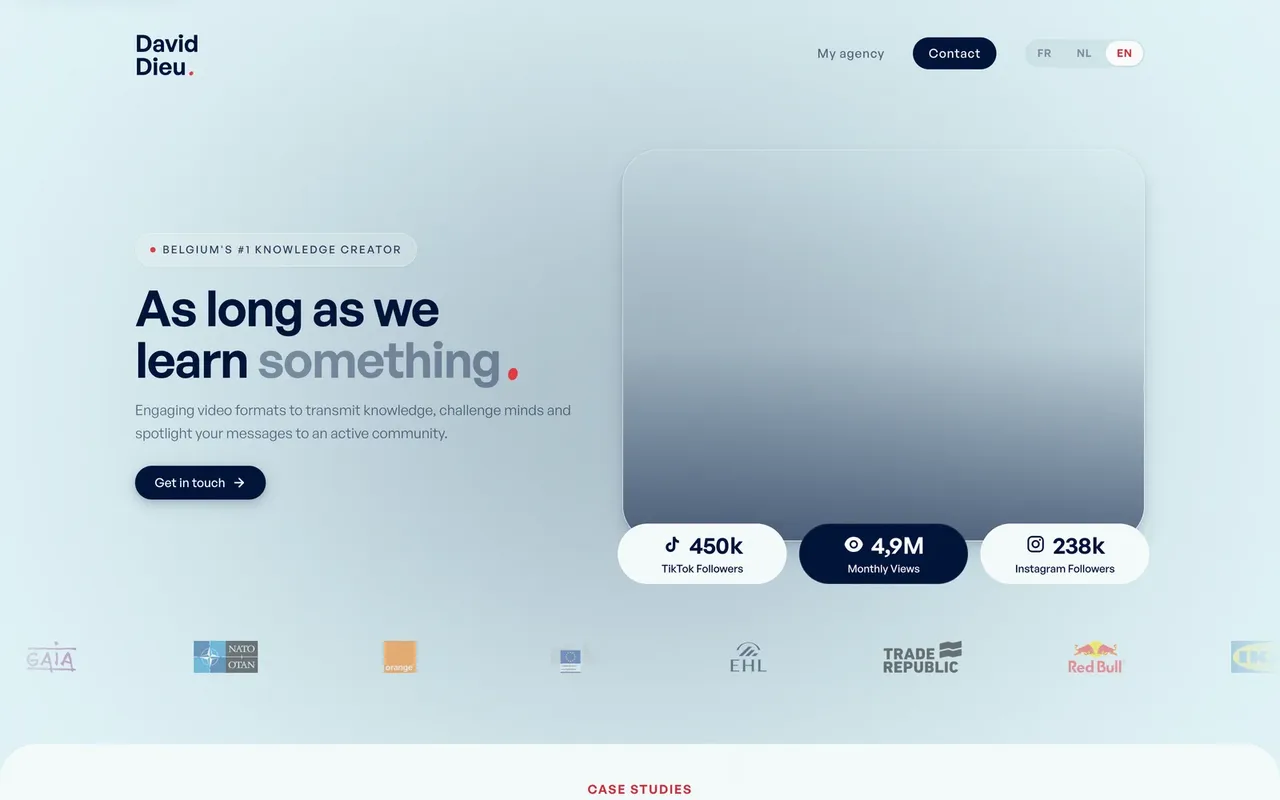
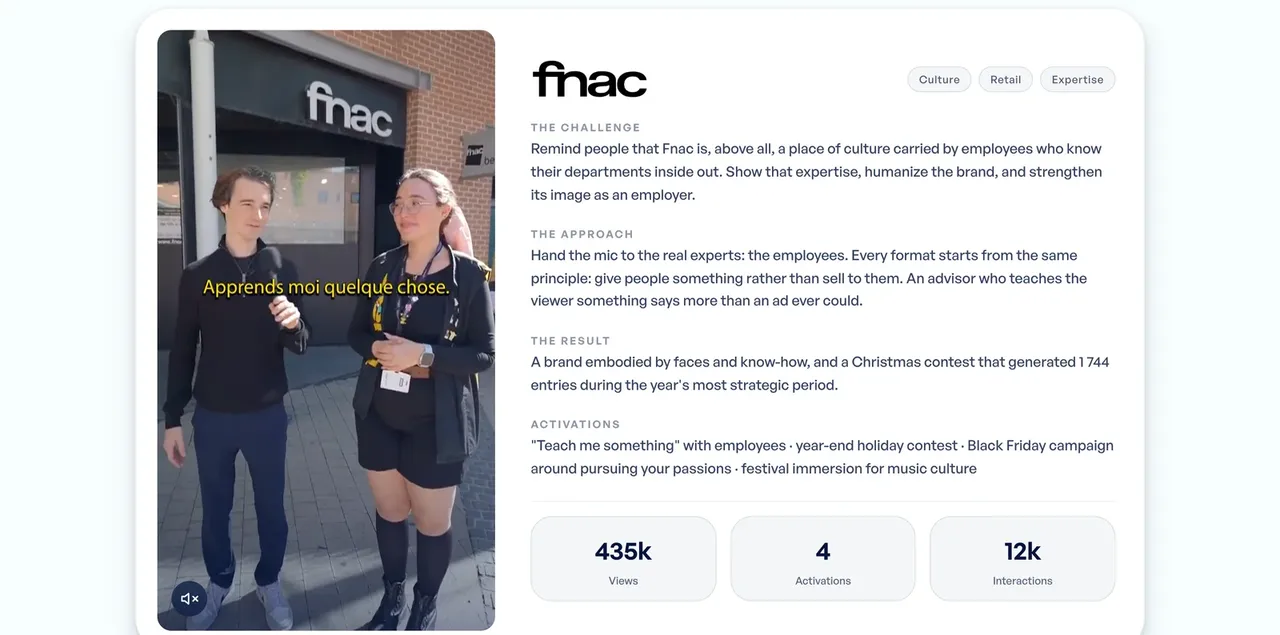
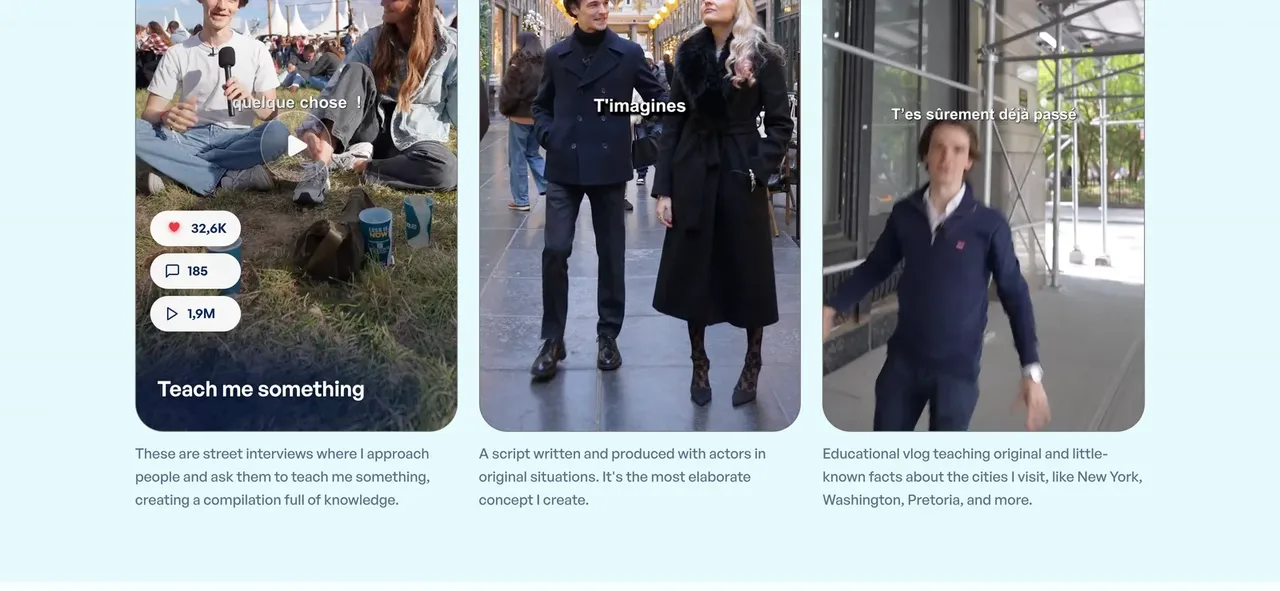
A collaboration reads in three beats
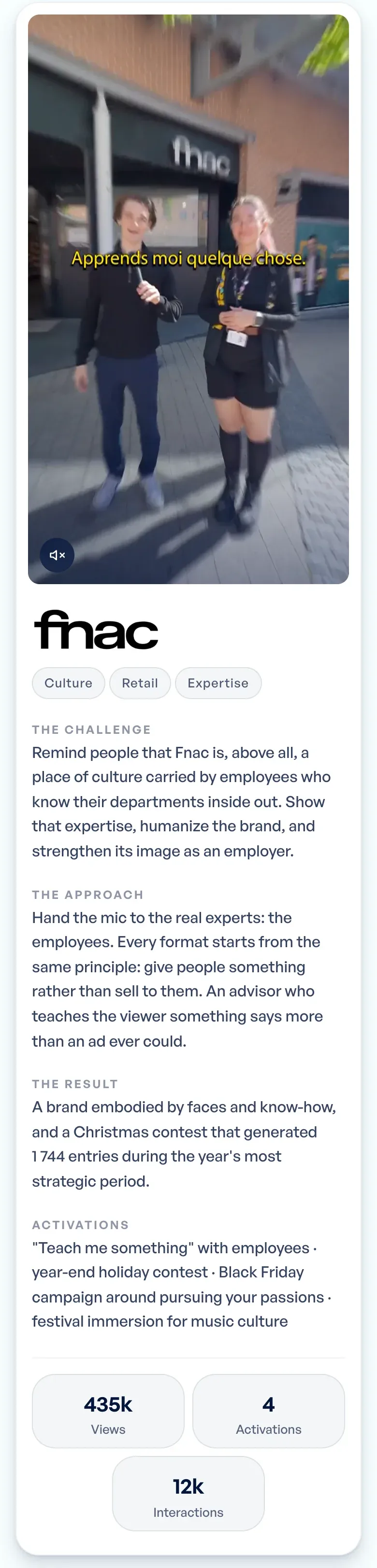
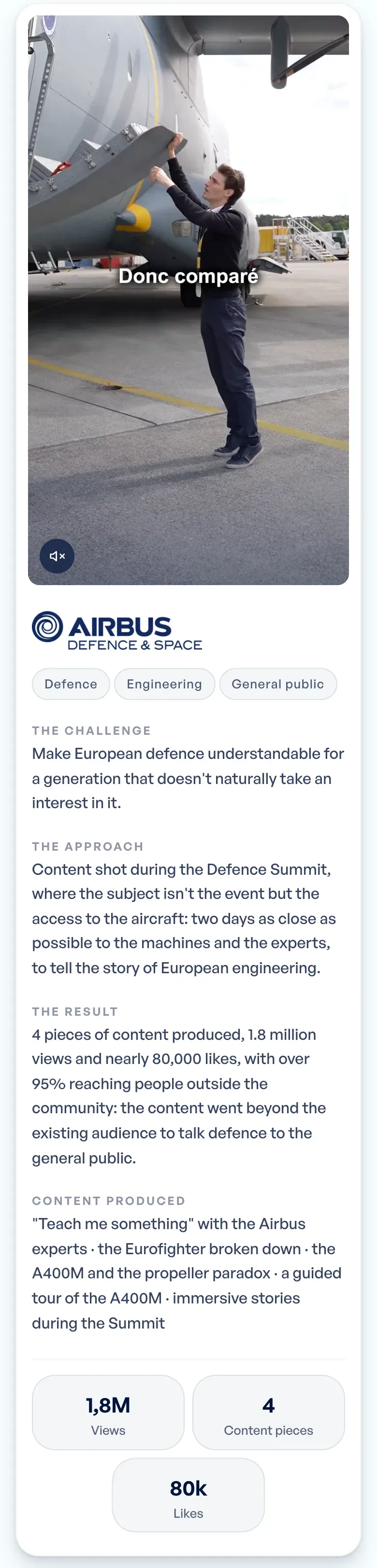
Every collaboration gets a card, and every card follows the same frame: the challenge, the approach, the result, then the figures. Fnac, Airbus Defence & Space, the City of Brussels all go through the same mould. That is what makes the site readable for someone comparing suppliers rather than creators, because they can jump from card to card and find the information in the same place every time. The rest of the page follows the same logic: formats are listed, press coverage is cited, recurring questions are answered in a FAQ. It is not a showcase, it is a case file.
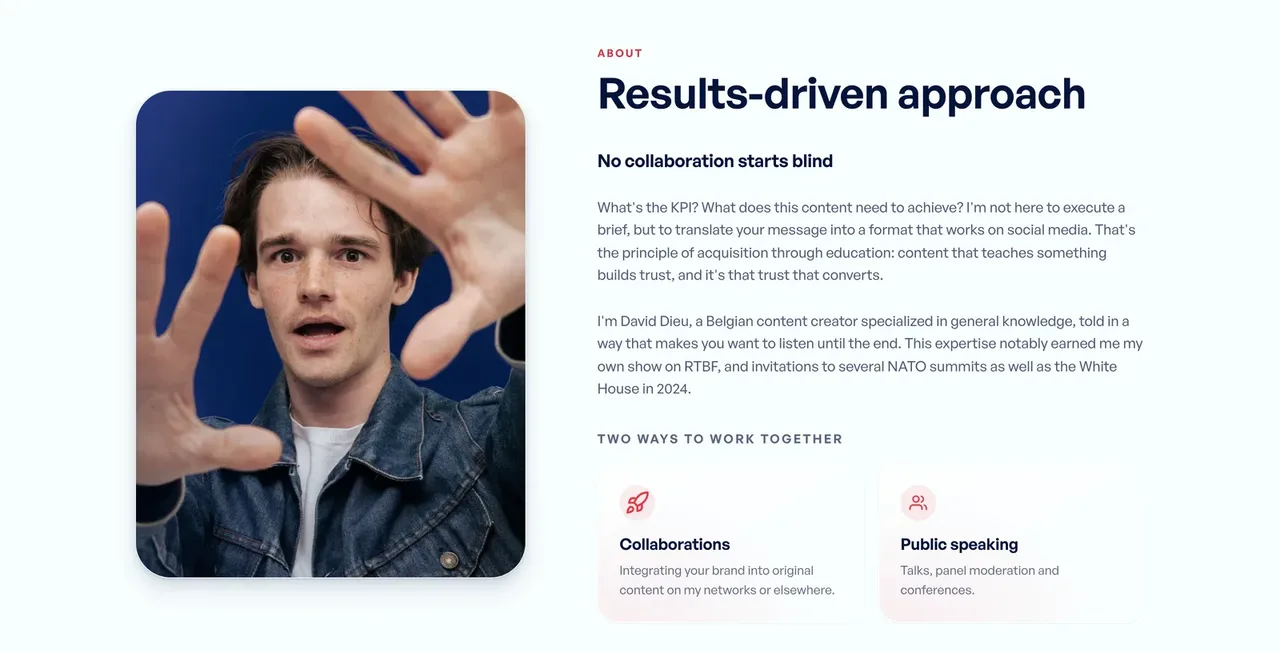
Reading on a phone is not an adaptation here, it is the normal case: a brand opens the link from a conversation, often between two meetings. So the cards keep their single-column structure, the figures stay visible without unfolding anything, and navigation never asks you to go back to compare. A dossier you can go through standing in a corridor stands a better chance of being read in full than a PDF you promise yourself you will open later.
Measured after launch
The site has been live since 9 August 2026, in French, English and Dutch. An SEO audit scored it 63/100 on 11 August. After the fixes, the same audit grid gave 83/100 on 27 August, and all 9 sitemap pages were indexed by Google. On 28 September 2026, Lighthouse mobile measures 100 for accessibility and 100 for SEO on the homepage.
- SEO audit score, from 11 to 27 August 2026
- 63 → 83
- Sitemap pages indexed by Google on 27 August 2026
- 9/9
- Accessibility, Lighthouse mobile, 28 September 2026
- 100
Measured from 11/08 to 28/09/2026
Visit daviddieu.be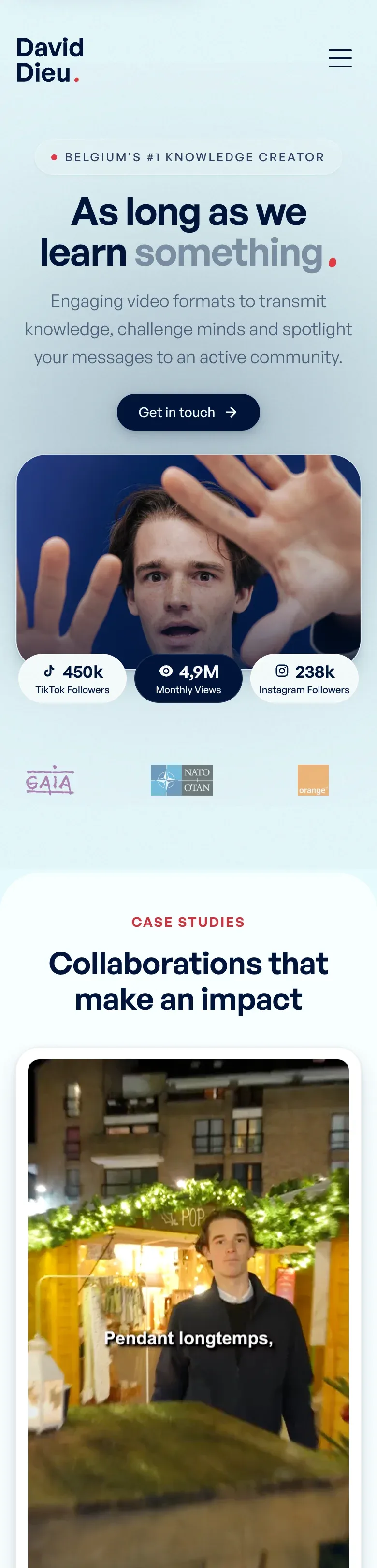

Before, during, after: the same method on every project
See our expertise · Web Design & Development Let's talk about your project- Before
Discovery
We get to know the project, ask our questions and talk it through with you.
- Before
Inspiration and direction
We gather inspiration and set a direction with you, before anything gets created.
- During
Creation
The heart of the project, paced by regular back and forth with you.
- After
Delivery and testing
We deliver, then check with you that everything works.
- After
Handover and adjustments
We train you and help you get to grips with the material. Your feedback is taken on board to fine-tune it.